Even healthy teeth can have cosmetic imperfections that affect how a person feels about smiling. Stubborn discoloration, chipped enamel, uneven tooth shapes, small gaps, and minor alignment concerns can all draw attention away from the overall appearance of the smile. Custom dental veneers in Algonquin, IL can address several of these concerns at the same time by creating a more balanced and consistent appearance.
Dental Symphony provides personalized cosmetic treatment planning based on each patient’s teeth, bite, facial features, and smile goals. Veneers are not designed as identical coverings that create the same smile for every person. Their shape, shade, length, and proportions are selected to complement the individual patient.
Understanding what veneers can correct, how treatment works, and what long-term care involves can help patients decide whether this cosmetic option fits their needs.
What Are Dental Veneers?
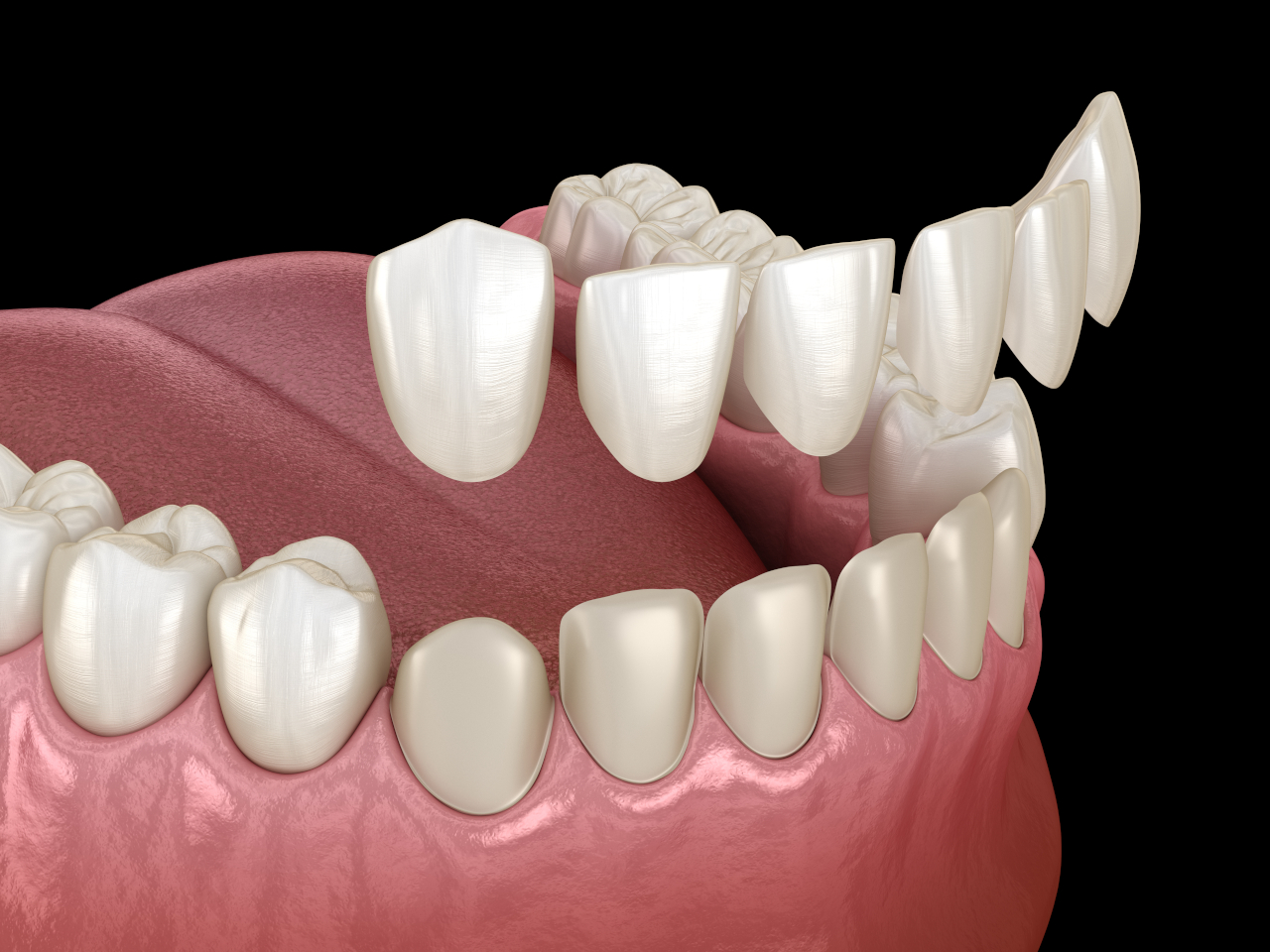
Dental veneers are thin, custom-made shells that are bonded to the front surfaces of teeth. They are commonly made from porcelain because porcelain can closely resemble the color, translucency, and reflective qualities of natural enamel.
A veneer covers the visible front of the tooth while leaving much of the underlying structure in place. It can change the apparent color, shape, length, width, or alignment of the treated tooth.
Veneers are most commonly placed on teeth that are visible when a patient smiles. Some patients need only one veneer to improve a single damaged tooth, while others choose several veneers to create a coordinated smile transformation.
What Cosmetic Concerns Can Veneers Address?
Dental veneers are versatile because they can improve several features at once. They may be considered for teeth affected by:
- Deep stains or discoloration
- Chipped or worn enamel
- Small cracks that do not affect the tooth root
- Minor gaps between teeth
- Uneven tooth lengths
- Irregular or asymmetrical tooth shapes
- Teeth that appear smaller than surrounding teeth
- Minor crowding or rotation
- Enamel defects
- A smile that appears visually unbalanced
Veneers can improve appearance, but they do not treat every dental condition. Active decay, gum disease, severe alignment problems, or significant structural damage may need to be treated before cosmetic care begins.
How Veneers Improve Tooth Color
Professional teeth whitening can brighten many common stains, but some discoloration does not respond predictably to whitening products. Internal tooth changes, enamel defects, previous injury, and certain developmental conditions can create deeper or uneven coloring.
A veneer covers the visible surface of the tooth with a carefully selected porcelain shade. This can create a brighter and more consistent appearance even when the natural enamel cannot be lightened sufficiently.
The shade should be selected carefully. A natural-looking smile usually includes subtle variations in color and translucency rather than one flat, opaque tone.
How Veneers Repair Chipped or Worn Teeth
Small chips can make the edges of the teeth appear rough or uneven. Teeth grinding, acidic foods, aging, and normal wear may also shorten the teeth over time.
Veneers can rebuild the visible portion of these teeth and create smoother, more consistent edges. Restoring tooth length can also improve the proportions of the smile.
Before recommending veneers, the dentist evaluates why the damage occurred. If grinding or clenching contributed to the wear, protecting the finished veneers with a custom night guard may be necessary.
Can Veneers Close Gaps Between Teeth?
Veneers can sometimes close small spaces by slightly increasing the visible width of the neighboring teeth. The design must remain proportionate so the teeth do not appear unnaturally wide.
Larger gaps or spaces caused by significant tooth-position concerns may be better treated with orthodontic care. The dentist evaluates the size of the gap, position of the roots, bite, and overall tooth proportions before recommending treatment.
Can Veneers Make Teeth Look Straighter?
Veneers may improve the appearance of mildly rotated, uneven, or irregularly shaped teeth. By changing the visible surfaces, they can make the smile appear more aligned.
However, veneers do not physically move the tooth roots. Significant crowding, bite concerns, or widely displaced teeth may require clear aligners or another orthodontic approach.
Some patients benefit from completing orthodontic treatment before receiving veneers. Moving the teeth into healthier positions may reduce the amount of enamel preparation needed and create a stronger foundation for cosmetic treatment.
Who May Be a Candidate for Dental Veneers?
A suitable candidate generally has healthy teeth and gums, realistic cosmetic goals, and enough enamel to support bonding.
The dentist evaluates several factors, including:
- The health of the teeth and gums
- The amount of available enamel
- The patient’s bite
- Grinding or clenching habits
- The location and extent of cosmetic concerns
- Existing fillings, crowns, or bonding
- The patient’s oral hygiene habits
- The desired shape and color changes
Patients should understand that veneers are a long-term treatment commitment. Because a small amount of enamel is often removed, the treated teeth will generally continue needing veneers or another type of restoration in the future.
When Veneers May Not Be the Best Option
Veneers may not be appropriate when a tooth lacks enough healthy structure or when another condition could interfere with treatment.
Alternative care may be recommended for patients with:
- Untreated cavities
- Active gum disease
- Severely weakened or fractured teeth
- Very large existing fillings
- Insufficient enamel
- Uncontrolled teeth grinding
- Severe crowding or bite problems
- Habitual nail biting or chewing on hard objects
- Unrealistic expectations about the final appearance
Being told that veneers are not currently appropriate does not necessarily mean cosmetic improvements are impossible. The dentist may recommend treating oral health concerns first or choosing another cosmetic or restorative option.
The Dental Veneer Consultation
The consultation is an important part of creating a personalized result. The dentist examines the teeth, gums, bite, existing restorations, and facial proportions.
Patients should explain what they like and dislike about their smiles. Helpful details may include concerns about color, tooth length, gaps, symmetry, visible chips, or the amount of tooth displayed while smiling.
The dentist may take photographs, dental images, impressions, or digital scans. These records help evaluate the smile from different angles and plan the final tooth proportions.
Planning a Natural-Looking Smile
Successful veneer treatment involves more than making teeth brighter. The length and width of each veneer must complement the neighboring teeth, lips, gumline, and facial shape.
The dentist considers:
- Tooth size and proportion
- The curve of the smile
- The position of the lips
- The amount of tooth visible at rest
- The shape and height of the gumline
- The patient’s age and facial features
- The way the upper and lower teeth meet
- The desired degree of brightness
A smile can look polished without appearing artificial. Small variations in shape, texture, and translucency can help veneers resemble natural enamel.
How Many Veneers Will You Need?
The number of veneers depends on the patient’s goals and the number of teeth visible in the smile. One veneer may be enough to repair an isolated problem, while a broader cosmetic plan may involve several front teeth.
The dentist considers how the treated teeth will blend with the untreated teeth. Placing veneers only on the two front teeth may produce an uneven result if the neighboring teeth differ significantly in shade or shape.
Some patients choose six, eight, or more veneers to create a consistent appearance across the visible smile. There is no universal number that is correct for everyone.
Should Teeth Be Whitened Before Veneers?
Whitening may be recommended before veneer treatment when the patient wants to brighten the untreated natural teeth. Porcelain veneers do not respond to whitening products after they have been placed.
Completing whitening first allows the veneer shade to be matched to the brighter surrounding enamel. The teeth may need time to stabilize after whitening before the final shade is selected.
If whitening is completed after veneers are placed, the natural teeth may become lighter while the veneers remain the same color. This could create a visible difference.
What Happens During the Veneer Procedure?
The veneer process generally involves preparation, impressions or digital scans, temporary restorations when needed, and final placement.
Preparing the Teeth
The treatment area is numbed when necessary. A small amount of enamel may be removed from the front and edges of the teeth to create space for the veneers.
The amount of preparation depends on the existing tooth position, desired changes, and type of veneer. The goal is to create enough room for the porcelain without making the finished teeth appear bulky.
Taking Impressions or Digital Scans
Detailed records are taken after the teeth have been prepared. These records capture the shape of the teeth, gumline, neighboring teeth, and bite.
The veneers are then custom-made according to the treatment design. Their shape and color are selected to complement the rest of the smile.
Wearing Temporary Veneers
Temporary veneers may be placed while the final restorations are being created. They protect the prepared teeth and allow patients to preview the general size and shape of the planned smile.
Temporary materials are not as strong or stain-resistant as final porcelain. Patients should avoid hard, sticky, and highly pigmented foods during this stage.
Temporary veneers can also provide useful feedback. Patients may notice whether they want a minor adjustment to length, shape, or speech before the final restorations are completed.
Placing the Final Veneers
The temporary restorations are removed, and the teeth are cleaned. Each final veneer is evaluated for fit, color, shape, and contact with neighboring teeth.
The dentist may temporarily position the veneers so the patient can preview the appearance. Minor adjustments can be made before bonding.
The teeth are prepared with specialized materials that create a strong bonding surface. The veneers are then attached using dental cement, and a curing light helps harden the bond.
The dentist checks the bite and removes excess material. A follow-up appointment may be recommended to evaluate the gums, bite, and patient’s comfort after the mouth has adjusted.
Benefits of Dental Veneers
- Improved tooth color: Veneers can cover deep or uneven discoloration that may not respond fully to whitening.
- Repair of visible chips: Porcelain can restore smooth and balanced tooth edges.
- More consistent tooth shapes: Veneers can improve undersized, irregular, or asymmetrical teeth.
- Closure of small gaps: Carefully designed veneers may reduce visible spaces between teeth.
- A straighter-looking smile: Mild rotation or unevenness may be visually corrected without moving the tooth roots.
- Customized appearance: Each veneer can be designed according to the patient’s facial features and smile goals.
- Natural-looking translucency: Porcelain can reflect light in a way that resembles dental enamel.
- Resistance to staining: Porcelain is less likely to absorb stains than natural enamel or composite material.
- Conservative cosmetic coverage: Veneers generally require less tooth reduction than full dental crowns.
- Multiple improvements in one treatment: Color, shape, length, spacing, and symmetry can often be addressed together.
Do Dental Veneers Look Natural?
Well-designed veneers are intended to blend with the patient’s smile rather than look like identical artificial teeth. The final appearance depends on thoughtful planning, material selection, and attention to detail.
Natural teeth are not completely flat or uniformly white. They contain subtle surface textures, translucency, and variations in brightness. These characteristics can be incorporated into porcelain veneers.
The goal is not always to create the brightest possible smile. A shade that complements the skin tone, surrounding teeth, and facial features may create a more believable result.
Do Veneers Feel Like Natural Teeth?
After the adjustment period, veneers should feel smooth and comfortable. The tongue may notice changes in tooth shape or length during the first several days.
The bite should feel balanced. Persistent discomfort, roughness, or difficulty bringing the teeth together should be reported to the dental office.
Minor adjustments may be needed after placement as the patient begins eating and speaking normally.
Do Veneers Require Special Care?
Veneers do not require a separate hygiene routine, but the teeth beneath and around them still require consistent care.
Brush twice daily using a soft-bristled toothbrush and clean between the teeth every day. Plaque can collect near the edges of the veneers and contribute to gum inflammation or decay in the natural tooth.
Use nonabrasive dental products when recommended. Highly abrasive toothpaste may scratch restoration surfaces over time.
Foods and Habits That Can Damage Veneers
Porcelain veneers are durable, but they can chip or fracture under excessive force. Avoid using veneered teeth to open packages, cut thread, or bite nonfood objects.
Patients should also avoid:
- Chewing ice
- Biting fingernails
- Chewing pens or pencils
- Cracking nuts with the teeth
- Biting directly into exceptionally hard foods
- Using the front teeth to tear packaging
Firm foods can often be enjoyed safely by cutting them into smaller pieces and chewing with the back teeth.
Veneers and Teeth Grinding
Grinding and clenching can place heavy pressure on veneers and natural teeth. Patients may grind during sleep without realizing it.
Signs can include worn enamel, jaw soreness, morning headaches, chipped teeth, or flattened biting surfaces.
A custom night guard may be recommended to protect the veneers. The appliance creates a barrier between the upper and lower teeth and helps distribute pressure.
Patients who do not use a recommended night guard may face a higher risk of porcelain fractures or bonding failure.
Can Cavities Develop Beneath Veneers?
Yes. Porcelain cannot decay, but the natural tooth surrounding and supporting the veneer can still develop a cavity.
Decay often begins near the margin where the veneer meets the tooth. Daily brushing, flossing, fluoride exposure, and routine dental care help protect this area.
If decay develops, the veneer may need to be removed so the tooth can be treated. The final restoration depends on how much healthy tooth structure remains.
Can Veneers Stain?
Porcelain is highly resistant to staining. Coffee, tea, red wine, and other pigmented foods are less likely to discolor porcelain than natural enamel.
However, the natural tooth structure, dental cement, and surrounding teeth can still change color. Plaque and surface buildup can also make the smile appear less bright.
Professional cleaning and good home care help maintain a polished appearance. Smoking can discolor natural teeth and affect gum health, creating a visible contrast around veneers.
Can Veneers Be Whitened?
No. Traditional whitening agents do not lighten porcelain veneers. The shade selected during treatment remains relatively stable.
If a patient wants brighter natural teeth, whitening should usually be completed before the veneers are designed. If an older veneer no longer matches the surrounding teeth, replacement may be necessary to change its shade.
How Long Do Dental Veneers Last?
Veneers are designed as long-term restorations, but they do not last forever. Their lifespan depends on oral hygiene, bite forces, habits, material, bonding, and regular professional care.
Over time, veneers may chip, loosen, wear, or require replacement because of changes in the teeth and gums. Gum recession can expose a portion of natural tooth near the veneer edge.
Routine examinations allow the dentist to monitor the veneers, supporting teeth, bite, and gum health.
What Happens If a Veneer Chips or Falls Off?
Keep the veneer or any broken pieces if they can be found. Store them in a clean container and contact the dental office.
Do not use household glue to reattach the veneer. Household adhesives are not designed for oral use and can damage the tooth or restoration.
A minor porcelain chip may sometimes be smoothed or repaired, while more extensive damage may require a replacement veneer. The supporting tooth should also be examined for decay or fracture.
Dental Veneers Compared With Dental Bonding
Dental bonding uses tooth-colored composite material placed directly on the tooth. It can repair small chips, close minor gaps, and improve tooth shape, often during one appointment.
Bonding may require less enamel preparation and may cost less than porcelain veneers. However, composite material is generally more vulnerable to staining, wear, and chipping.
Veneers may provide a more durable and stain-resistant option for patients seeking broader cosmetic changes. The best choice depends on the size of the concern, budget, bite, and desired longevity.
Dental Veneers Compared With Crowns
A veneer covers primarily the front surface of a tooth. A dental crown surrounds most or all of the visible tooth.
Veneers are generally used when the tooth is healthy but needs cosmetic improvement. Crowns are often recommended when a tooth is severely damaged, weakened, extensively filled, or treated with root canal therapy.
A crown requires more tooth preparation but provides greater structural coverage. The dentist chooses the most conservative option that can safely meet the patient’s needs.
Dental Veneers Compared With Teeth Whitening
Professional whitening is designed to lighten natural enamel. It can be a conservative choice for patients who are satisfied with the size, shape, and alignment of their teeth but want a brighter smile.
Whitening cannot repair chips, close gaps, lengthen teeth, or change tooth shape. Veneers can address these concerns while also changing color.
Whitening should often be considered first when discoloration is the only concern. Veneers may be more appropriate when several cosmetic changes are desired.
Dental Veneers Compared With Clear Aligners
Clear aligners gradually move the teeth and roots into new positions. They can address crowding, spacing, and certain bite concerns without changing the natural enamel shape.
Veneers create the appearance of improved alignment by changing the visible tooth surfaces. They do not correct the underlying position of the roots.
Patients with significant alignment concerns may benefit from clear aligners before cosmetic treatment. In some cases, orthodontic care alone may create the desired result.
Frequently Asked Questions About Dental Veneers
Are dental veneers permanent?
Veneers are considered an irreversible treatment because enamel is commonly removed during preparation. They may eventually require repair or replacement, but the treated teeth will continue needing coverage.
Does getting veneers hurt?
The teeth can be numbed during preparation to keep the patient comfortable. Mild temporary sensitivity may occur after treatment as the teeth and gums adjust.
How many veneers will I need?
The number depends on the patient’s goals and how many teeth are visible when smiling. Some patients need one veneer, while others select several for a coordinated transformation.
Can veneers fix crooked teeth?
Veneers can improve the appearance of mild rotation or unevenness. Significant crowding or bite concerns may require clear aligners or another orthodontic treatment.
Can veneers be removed?
Because enamel is often removed during treatment, the tooth generally cannot be returned to its exact original condition. A removed veneer usually needs to be replaced with another restoration.
Will veneers affect speech?
Minor temporary speech changes may occur if the tooth length or shape changes. Most patients adjust as the tongue becomes familiar with the new surfaces.
Can one tooth receive a veneer?
Yes. One veneer may be used to improve a single chipped, discolored, or irregularly shaped tooth. Careful shade matching helps it blend with the neighboring teeth.
Can veneers cover existing fillings?
Small fillings may sometimes remain beneath a veneer, but large restorations can reduce the available enamel for bonding. A crown or another treatment may be more appropriate for heavily restored teeth.
Do veneers protect teeth from cavities?
No. Veneers improve and cover the visible surface, but the underlying tooth can still develop decay. Daily hygiene and routine dental care remain essential.
Are veneers suitable for patients who grind their teeth?
Veneers may be possible when grinding is managed. A custom night guard and treatment of contributing bite concerns may be recommended to protect the restorations.
Design a Smile That Complements You
Dental veneers can improve discoloration, chips, gaps, uneven tooth shapes, and minor alignment concerns through one personalized cosmetic treatment. The most natural results begin with healthy teeth, careful planning, realistic expectations, and a design that complements the patient’s unique features.
Patients interested in transforming their smiles with dental veneers can contact Dental Symphony in Algonquin, IL. Call (847) 474-9533 to schedule a cosmetic consultation and learn whether veneers or another treatment may be right for your goals.
“`