Even one missing tooth can affect the way your smile looks, feels, and functions. An open space may make chewing less comfortable, allow neighboring teeth to shift, and alter how pressure is distributed throughout the bite. For patients who want a fixed tooth replacement, dental bridges in Algonquin, IL are one of the restorative options available at Dental Symphony.
A dental bridge fills a gap by placing a replacement tooth within the missing space and using neighboring teeth for support. Unlike a removable partial denture, a traditional bridge remains in the mouth and functions as part of the patient’s everyday bite.
Understanding how bridges work, how they compare with dental implants, and what long-term maintenance involves can help patients make informed decisions about replacing missing teeth.
What Is a Dental Bridge?
A dental bridge is a fixed dental restoration used to replace one or more missing teeth.
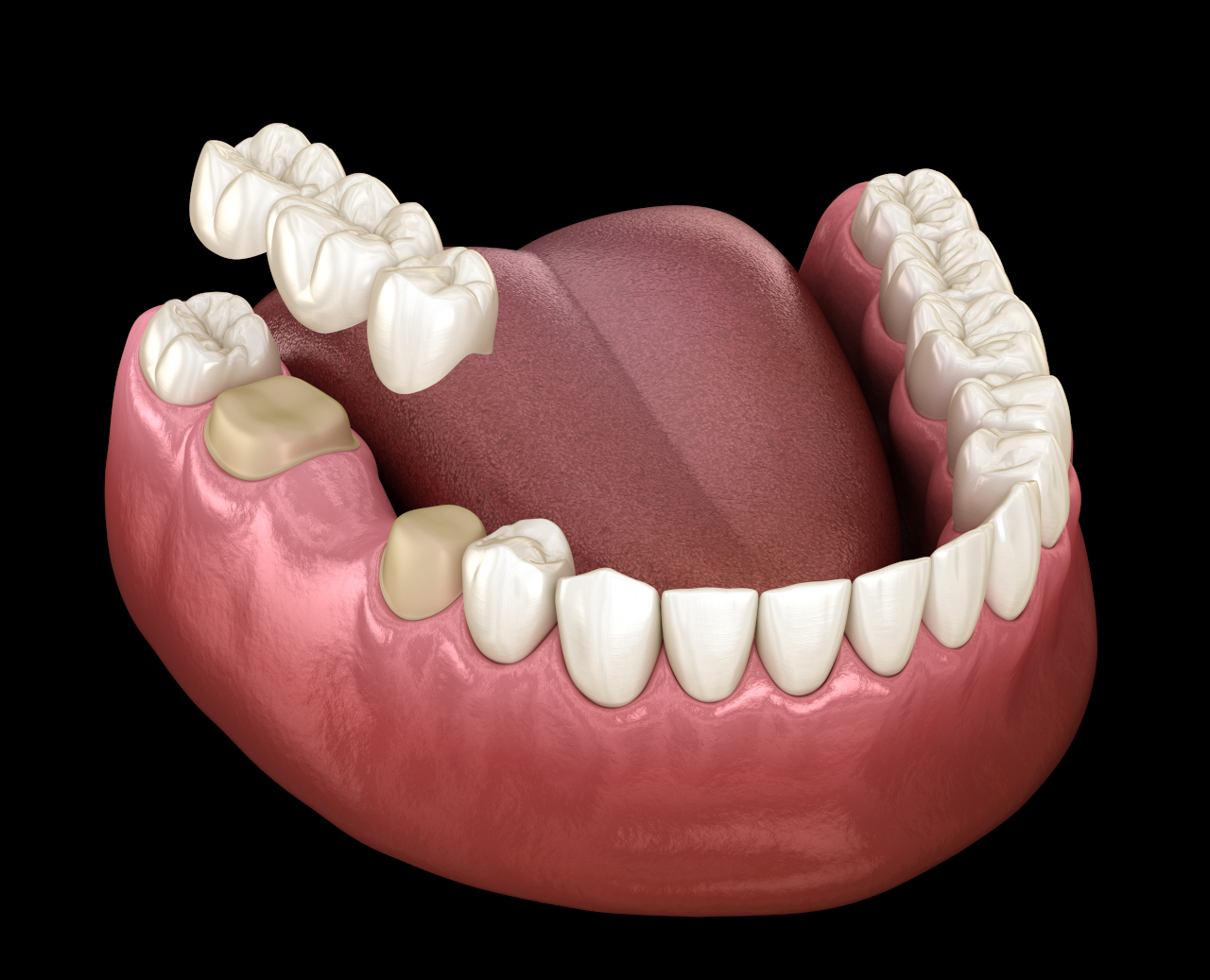
In a traditional bridge, the teeth next to the open space are prepared for crowns. These crowns are connected to an artificial replacement tooth called a pontic.
When the bridge is placed, the crowns fit over the supporting teeth and the pontic fills the missing tooth space.
The restoration is cemented in place, which means the patient does not remove it for eating or cleaning.
Why Replace a Missing Tooth?
Some patients consider leaving a missing tooth untreated when the gap is toward the back of the mouth or is not noticeable while smiling.
However, teeth work together as a system. Losing one tooth can eventually influence the teeth around it.
Possible changes include:
- Neighboring teeth drifting into the gap
- The opposing tooth moving toward the open space
- Changes in bite alignment
- Uneven chewing pressure
- Food becoming trapped in the area
- Difficulty chewing certain foods
- Changes in smile appearance
Replacing the tooth can help restore continuity to the dental arch and improve bite stability.
How Does a Traditional Dental Bridge Work?
A traditional bridge commonly involves three main parts.
Abutment Teeth
These are the natural teeth on either side of the missing space. They are prepared to support crowns.
Dental Crowns
The crowns cover the supporting teeth and anchor the restoration.
Pontic
The pontic is the artificial tooth positioned between the crowns. It fills the visible gap created by tooth loss.
All components are connected into one restoration that is securely attached to the supporting teeth.
Who May Be a Candidate for a Dental Bridge?
A bridge may be considered for patients who have one or more missing teeth and healthy teeth capable of supporting the restoration.
The dentist evaluates:
- The condition of neighboring teeth
- Gum health
- Bone support around the abutment teeth
- The size of the missing space
- The location of the missing tooth
- The patient’s bite
- Existing crowns or fillings
- Grinding or clenching habits
The supporting teeth must be strong enough to withstand the additional forces placed on them by the bridge.
When a Dental Bridge May Be Especially Useful
A bridge may be particularly practical when the teeth next to the gap already require crowns because of large fillings, fractures, or other restorative needs.
In that situation, the crowns can serve two purposes. They restore the supporting teeth and anchor the replacement tooth.
A bridge may also be considered when a patient prefers a fixed restoration but is not pursuing implant treatment.
Benefits of Dental Bridges
- Fixed tooth replacement: The restoration remains in place instead of being removed daily.
- Improved chewing: Replacing the missing tooth restores additional biting and chewing surface.
- Restored appearance: The pontic fills a visible gap in the smile.
- Reduced tooth shifting: Filling the space helps neighboring teeth maintain their positions.
- Improved bite stability: The restoration helps restore contact between the upper and lower arches.
- Natural-looking materials: Tooth-colored materials can be designed to coordinate with surrounding teeth.
- No implant surgery required: A traditional bridge replaces the tooth without placing an implant into the jawbone.
- Predictable restorative option: Bridges have been used for many years to replace missing teeth in appropriate cases.
What Happens During the Dental Bridge Process?
Bridge treatment generally requires careful preparation of the supporting teeth and fabrication of a customized restoration.
Dental Examination
The dentist evaluates the missing tooth space, supporting teeth, gums, bite, and available dental imaging.
Preparing the Supporting Teeth
The abutment teeth are numbed and shaped so crowns can fit over them.
Any decay or failing restorative material must be addressed during this stage.
Taking Dental Records
Impressions or digital scans record the prepared teeth, neighboring structures, and bite.
These records help create a bridge that fits the space and contacts the opposing teeth properly.
Temporary Bridge
A temporary restoration may be used while the final bridge is being created.
The temporary helps protect prepared teeth and maintain appearance during the interim period.
Final Bridge Placement
The dentist removes the temporary bridge and checks the final restoration for fit, appearance, contact, and bite.
Once the bridge fits properly, it is securely cemented to the supporting teeth.
Does Getting a Dental Bridge Hurt?
Local anesthesia is used while the supporting teeth are prepared so treatment can be completed comfortably.
Patients may experience temporary sensitivity after the teeth have been prepared, especially while wearing a temporary bridge.
The gums may also feel mildly tender as they adjust to the new restoration.
Persistent pain, significant swelling, or a bite that feels uneven should be reported to the dental office.
What Does a New Bridge Feel Like?
A new restoration may initially feel noticeable to the tongue because the shape of the area has changed.
The bridge should eventually feel like a stable part of the bite. Patients may need a short adjustment period while chewing and speaking.
The bridge should not feel loose or move when biting.
If one area contacts too heavily, the dentist may need to make a minor adjustment.
Dental Bridge Versus Dental Implant
Both bridges and implants can replace missing teeth, but they use different methods.
A traditional bridge uses neighboring teeth for support. Those teeth are reshaped and covered with crowns.
A dental implant replaces the missing tooth root with a post placed in the jawbone. An implant crown is then attached without requiring crowns on neighboring teeth.
A bridge may be attractive when:
- The adjacent teeth already need crowns
- The patient prefers to avoid implant surgery
- The treatment situation is suitable for a fixed bridge
An implant may be attractive when:
- The neighboring teeth are healthy and do not need crowns
- The patient has adequate bone and gum health
- Replacing the missing root is a priority
The right option depends on the entire mouth rather than the gap alone.
Dental Bridge Versus Partial Denture
A partial denture is removable. It replaces several missing teeth using an appliance that may attach to remaining natural teeth.
A bridge is fixed and is not removed by the patient.
A partial denture may replace teeth in multiple areas of an arch, while a bridge is commonly used for a more localized space.
Each option has different requirements for support, cleaning, comfort, and long-term maintenance.
Can a Bridge Replace More Than One Tooth?
Yes. A bridge may replace more than one adjacent missing tooth depending on the location, span, supporting teeth, bite forces, and restorative design.
Longer bridges place more pressure on the supporting teeth, so the dentist must evaluate whether the abutment teeth can provide adequate support.
In some situations, dental implants may be used to support a bridge replacing several missing teeth.
How Do You Clean Under a Dental Bridge?
A traditional bridge requires a different flossing technique because the pontic is connected to the crowns and normal floss cannot simply pass down between each replacement tooth.
Patients may use:
- Floss threaders
- Specialized bridge floss
- Interdental brushes
- Water flossers
- Other dentist-recommended tools
The goal is to remove plaque and food from beneath the pontic and along the gumline around the supporting crowns.
Why Cleaning Beneath a Bridge Is Important
The artificial replacement tooth cannot develop a cavity, but bacteria can still affect the surrounding gums and supporting natural teeth.
If plaque accumulates beneath the bridge, patients may experience:
- Gum inflammation
- Bleeding
- Bad breath
- Decay around supporting teeth
- Periodontal problems
A bridge is only as healthy as the teeth and tissues supporting it.
Can Supporting Teeth Get Cavities?
Yes. The abutment crowns protect much of the visible tooth, but natural structure remains beneath and around the margins.
Decay can develop near the edges of the crowns if plaque repeatedly accumulates in those areas.
Good home hygiene and routine dental examinations help protect the supporting teeth.
How Long Does a Dental Bridge Last?
The lifespan varies according to the health of the supporting teeth, bridge design, bite forces, oral hygiene, diet, and habits such as grinding.
With good care, a bridge can provide many years of function.
However, the restoration may eventually require replacement because of wear, decay around supporting teeth, fractures, gum changes, or other complications.
Signs a Dental Bridge May Need Attention
Contact the dental office if you notice:
- The bridge feels loose
- Pain while chewing
- New temperature sensitivity
- A chipped restoration
- Food repeatedly collecting beneath the bridge
- Persistent bad breath near the restoration
- Bleeding or swollen gums
- A change in the bite
- Visible gaps near crown margins
Early evaluation may allow a problem to be addressed before the bridge or supporting teeth become more extensively damaged.
What Happens If a Bridge Comes Loose?
Do not continue chewing normally on a loose bridge.
Keep the restoration if it comes completely out and contact the dental office.
Do not use household glue to reattach a dental bridge. These products are not designed for oral use and may damage the restoration or supporting teeth.
The dentist needs to determine why the bridge loosened before deciding whether it can be recemented or needs additional treatment.
Can Teeth Grinding Damage a Bridge?
Grinding and clenching can place heavy pressure on natural teeth and restorations.
Over time, excessive forces may contribute to:
- Porcelain chipping
- Crown loosening
- Wear of the restoration
- Damage to supporting teeth
- Changes in the bite
A custom night guard may be recommended for patients with signs of grinding.
What Happens to Jawbone After a Tooth Is Lost?
Natural tooth roots help transfer chewing forces into the jawbone.
After a tooth is lost, the bone in that specific area may gradually change because the root is no longer present.
A traditional dental bridge restores the visible tooth and chewing surface but does not place a replacement root into the bone.
This is one important difference between a bridge and dental implant.
Can a Bridge Improve Speech?
Missing teeth can affect the way the tongue interacts with the dental arch when producing certain sounds.
Replacing the missing tooth may help restore normal contact points.
Patients may need a short adjustment period after receiving a new bridge, but speech often becomes more natural as the tongue adapts.
Can a Bridge Improve Appearance?
Yes. A bridge fills the visible gap left by missing teeth.
The restoration can be designed to coordinate with the surrounding teeth in:
- Shade
- Shape
- Size
- Length
- General smile proportions
The condition of the gums and shape of the missing tooth space also affect the final appearance.
How to Protect a Dental Bridge
Patients can support bridge longevity by:
- Brushing twice daily
- Cleaning beneath the pontic every day
- Cleaning carefully around crown margins
- Attending routine examinations and cleanings
- Avoiding chewing ice
- Not using teeth to open packages
- Wearing a night guard when recommended
- Reporting changes promptly
Frequently Asked Questions About Dental Bridges
Is a dental bridge removable?
A traditional dental bridge is fixed in place and is not removed by the patient for daily cleaning.
Can a bridge replace two missing teeth?
In some cases, yes. The dentist must evaluate the size of the space, condition of supporting teeth, and bite forces before determining the appropriate design.
Do you have to crown the teeth next to a bridge?
Traditional bridges generally rely on crowned neighboring teeth for support. Other bridge designs or implant-supported options may differ.
Does getting a dental bridge hurt?
The supporting teeth are numbed during preparation. Temporary sensitivity or gum tenderness may occur afterward.
Can food get under a dental bridge?
Food and plaque can collect beneath the replacement tooth, which is why specialized daily cleaning is important.
Can a bridge get a cavity?
The artificial portion cannot decay, but the supporting natural teeth can develop cavities around crown margins.
What happens if a dental bridge becomes loose?
Contact the dental office promptly. The dentist needs to determine whether the problem involves the cement, restoration, decay, or supporting teeth.
Is a bridge better than an implant?
Neither option is automatically better for every patient. The appropriate choice depends on neighboring teeth, bone health, medical factors, treatment preferences, and restorative goals.
Replace Missing Teeth With a Dental Bridge in Algonquin
A missing tooth can affect much more than appearance. Replacing the gap can restore chewing function, support bite stability, and reduce unwanted shifting of neighboring teeth. A dental bridge offers a fixed restorative option for appropriate patients who want to rebuild a more complete smile.
Patients interested in replacing one or more missing teeth can contact Dental Symphony in Algonquin, IL. Call (847) 474-9533 to schedule a restorative consultation and learn whether a dental bridge, dental implant, denture, or another treatment is appropriate for your needs.