
Losing one tooth may seem like a relatively small dental problem, but an untreated gap can affect chewing, bite balance, neighboring teeth, and the appearance of the smile. Patients looking for a fixed solution often compare a dental implant in Algonquin, IL with a traditional dental bridge.
Dental Symphony provides both implant-based tooth replacement and restorative dentistry, allowing treatment to be planned around the condition of the missing tooth site, neighboring teeth, jawbone, gums, bite, and long-term goals. Neither option is automatically right for every patient.
Understanding how implants and bridges differ can help patients make a more informed decision about replacing a single missing tooth.
Why Replace One Missing Tooth?
A missing tooth leaves more than a visible space. Teeth function together as part of a connected bite, and removing one part of that system can allow gradual changes to occur.
Possible consequences include:
- Neighboring teeth shifting toward the gap
- The opposing tooth moving into the open space
- Changes in bite alignment
- Uneven chewing pressure
- Food trapping
- Difficulty chewing on one side
- Changes in smile appearance
- Gradual jawbone changes at the missing tooth site
Replacing the missing tooth can restore the space while helping maintain stability throughout the rest of the dental arch.
What Is a Single-Tooth Dental Implant?
A dental implant replaces the missing tooth root with a small post positioned within the jawbone.
After the implant heals and integrates with the surrounding bone, an abutment and dental crown are attached to create the visible replacement tooth.
The completed restoration functions independently rather than relying on neighboring natural teeth for support.
A single implant generally consists of:
- The implant post within the jawbone
- An abutment connecting the implant to the restoration
- A custom dental crown replacing the visible tooth
What Is a Dental Bridge?
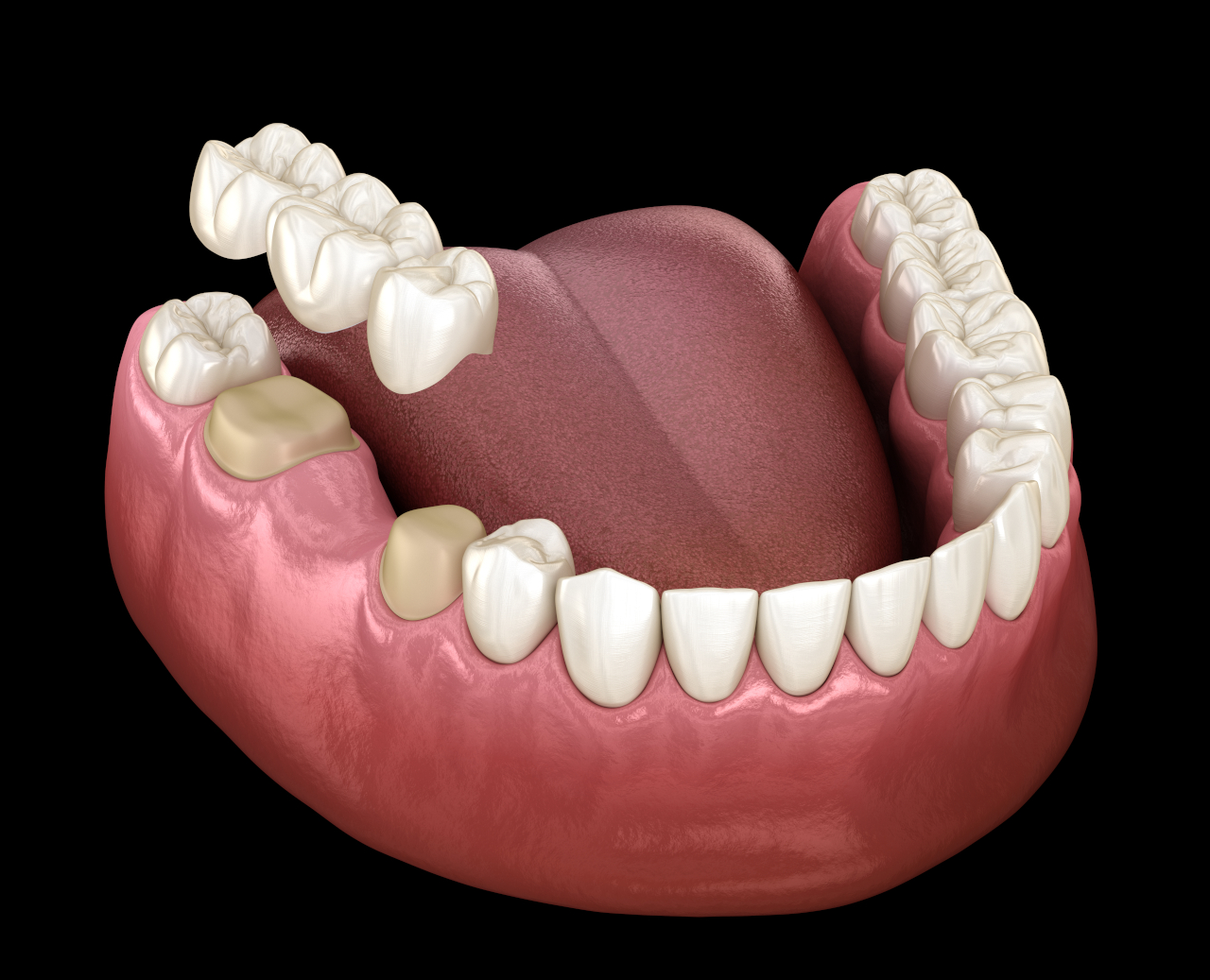
A traditional dental bridge replaces a missing tooth by using neighboring teeth as anchors.
The teeth on either side of the gap are prepared for crowns. These crowns are connected to an artificial tooth positioned in the missing space.
The complete restoration is cemented in place and remains in the mouth during eating and cleaning.
Dental Implant Versus Bridge: The Main Difference
The most important structural difference is how each restoration receives support.
A dental implant receives support from the jawbone and functions as an independent replacement.
A traditional bridge receives support from neighboring teeth.
This distinction affects treatment time, cleaning, tooth preparation, bone preservation, and long-term maintenance.
Does a Dental Implant Require Treatment of Neighboring Teeth?
One of the major advantages of a single dental implant is that healthy neighboring teeth generally do not need to be reshaped simply to support the replacement tooth.
The implant occupies the missing tooth site and supports its own crown.
This can be particularly appealing when the teeth next to the gap are completely healthy and have little or no existing restorative work.
Does a Bridge Require Crowns on Neighboring Teeth?
A traditional bridge generally requires the teeth on either side of the gap to be prepared for crowns.
This means some natural enamel must be reshaped to create space for the restoration.
When neighboring teeth already have large fillings, cracks, or other problems that require crowns, a bridge may provide an efficient way to restore those teeth while replacing the missing tooth at the same time.
Benefits of Replacing One Missing Tooth
- Restored chewing ability: Replacing the missing tooth creates an additional surface for biting and chewing.
- Improved smile appearance: A visible space can be replaced with a natural-looking restoration.
- Reduced tooth shifting: Filling the gap can help neighboring teeth maintain their positions.
- Improved bite stability: Restoring contact between the upper and lower arches helps distribute chewing forces more evenly.
- Easier everyday function: Patients may feel more comfortable eating and speaking with a complete dental arch.
- Protection of surrounding teeth: Restoring the gap may reduce abnormal forces caused by chewing primarily on one side.
- Greater confidence: Replacing a missing tooth can help patients feel more comfortable smiling and interacting socially.
How Dental Implants Help Preserve Jawbone
Natural tooth roots transfer chewing forces into the jawbone. When a tooth is removed, that stimulation disappears.
The bone in the area can gradually change over time.
A dental implant transfers forces into the jaw through the implant post, creating stimulation in the missing tooth site.
A traditional bridge restores the visible tooth but does not replace the missing root inside the bone.
Who May Be a Candidate for a Dental Implant?
Many adults missing a tooth may be candidates for implant treatment, but a detailed evaluation is necessary.
The dentist may consider:
- Available jawbone
- Gum health
- Overall medical health
- Smoking or tobacco use
- Oral hygiene
- The position of neighboring teeth
- The patient’s bite
- Medications that may affect healing
Patients with insufficient bone may still have options, including bone grafting in appropriate situations.
Who May Be a Candidate for a Dental Bridge?
A bridge may be considered when the neighboring teeth can provide adequate support and the patient wants a fixed restoration without implant surgery.
The supporting teeth should have healthy roots and sufficient bone support.
A bridge may be particularly practical when one or both adjacent teeth already require crowns.
How Long Does Dental Implant Treatment Take?
Dental implant treatment generally involves multiple stages.
The implant is placed into the jawbone and allowed time to heal. During this period, the bone integrates with the implant surface.
Once the implant is stable, the final crown can be attached.
The overall timeline varies according to:
- Healing response
- Bone quantity and quality
- Whether bone grafting is required
- The condition of the gums
- The location of the implant
Implant treatment usually takes longer than a traditional bridge because healing must occur before the final restoration is completed.
How Long Does a Dental Bridge Take?
A traditional bridge can generally be completed more quickly because implant healing is not required.
The supporting teeth are prepared, detailed records are taken, and a temporary restoration may be placed while the final bridge is created.
At the final appointment, the completed restoration is evaluated and cemented in place.
Does Dental Implant Surgery Hurt?
Local anesthesia is used to keep patients comfortable during implant placement.
Temporary soreness, swelling, or tenderness may occur afterward as the surgical site heals.
Patients receive individualized aftercare instructions regarding cleaning, diet, medications, and activity.
Significant or worsening symptoms should be reported to the dental office.
Does Getting a Dental Bridge Hurt?
The supporting teeth are numbed while they are prepared for crowns.
Patients may notice temporary sensitivity or gum tenderness after preparation, particularly while wearing a temporary restoration.
Once the final bridge is placed and the tissues adjust, it should feel stable during normal function.
How Do You Clean a Dental Implant?
A single implant crown is cleaned similarly to a natural tooth.
Patients should brush twice daily and clean carefully around the implant every day.
Although an implant cannot develop a cavity, the surrounding gums and bone can become inflamed if plaque accumulates.
Routine professional examinations and cleanings remain important.
How Do You Clean a Dental Bridge?
A bridge requires additional cleaning beneath the artificial replacement tooth because traditional floss cannot pass directly between the connected components.
Helpful tools may include:
- Floss threaders
- Bridge floss
- Interdental brushes
- Water flossers
Cleaning around the supporting crown margins is also essential because the natural teeth beneath them can still develop decay.
Can Dental Implants Get Cavities?
No. The implant and implant crown cannot develop tooth decay in the same way natural enamel can.
However, the tissues around an implant can develop inflammation or infection.
Consistent oral hygiene remains necessary to help protect the gums and supporting bone.
Can Teeth Supporting a Bridge Get Cavities?
Yes. The crowns themselves cannot decay, but the natural teeth beneath and around the crowns remain vulnerable.
Decay may develop near crown margins if plaque repeatedly accumulates.
If one supporting tooth develops a serious problem, the entire bridge may be affected.
How Long Does a Dental Implant Last?
Dental implants are designed as long-term tooth replacements.
The implant post may remain functional for many years when the surrounding tissues remain healthy.
The crown attached to the implant may eventually need repair or replacement because it experiences normal chewing forces and wear.
Long-term success depends on factors such as oral hygiene, gum health, smoking, bite forces, and regular professional care.
How Long Does a Dental Bridge Last?
A well-maintained bridge can provide many years of service, but it is not considered permanent.
Factors affecting longevity include:
- Health of supporting teeth
- Oral hygiene
- Cleaning beneath the bridge
- Grinding and clenching
- Cavity risk
- Gum health
- Chewing forces
Routine examinations allow the dentist to monitor the bridge and supporting teeth for early signs of concern.
Which Option Is Easier to Maintain?
A single implant crown can often be cleaned more similarly to a natural tooth because it stands independently.
A traditional bridge requires additional cleaning underneath the artificial tooth.
Both restorations require consistent home care and professional maintenance.
The best option is one the patient can realistically maintain over the long term.
What If the Neighboring Teeth Already Have Large Fillings?
The condition of neighboring teeth can significantly affect the decision.
If both teeth next to the gap are healthy and unrestored, preparing them for a bridge means removing healthy enamel.
If those same teeth already have large fillings or structural damage and would benefit from crowns, incorporating them into a bridge may be more reasonable.
The decision should be based on the health of the entire area rather than focusing only on the missing tooth.
What If There Is Not Enough Bone for an Implant?
Bone loss can occur after tooth extraction or prolonged tooth loss.
Dental imaging can help determine whether enough bone is available to support an implant.
Bone grafting may be considered when additional volume is needed.
Not every patient requires grafting, and not every site can be treated in exactly the same way.
Can Grinding Affect Implants and Bridges?
Yes. Grinding and clenching place additional force on natural teeth and dental restorations.
Heavy forces may contribute to:
- Restoration wear
- Chipped porcelain
- Loose components
- Damage to bridge-supporting teeth
- Excessive pressure around an implant restoration
A custom night guard may be recommended for patients with signs of bruxism.
What Happens If You Leave the Space Empty?
Not every missing tooth produces immediate problems, but changes can develop gradually.
Neighboring teeth may begin drifting toward the gap. The opposing tooth may move because it no longer has normal contact.
The bite can become less balanced, and future replacement may become more complicated if the space changes significantly.
An early consultation allows patients to understand their options before these changes progress.
Frequently Asked Questions About Dental Implants and Bridges
Is an implant better than a bridge for one missing tooth?
An implant can replace the missing tooth without using neighboring teeth for support, but a bridge may be appropriate when adjacent teeth already need crowns or when implant treatment is not preferred.
Does a dental implant require surgery?
Yes. The implant post is surgically positioned in the jawbone and allowed time to heal before the final restoration is completed.
Can a bridge be placed without surgery?
A traditional bridge does not require implant surgery. The neighboring teeth are prepared for crowns that support the replacement tooth.
Which option takes longer?
Dental implants generally require more overall treatment time because the implant needs a healing period before the final crown is attached.
Can a dental implant get a cavity?
No, but plaque-related inflammation can affect the gums and supporting bone around the implant.
Can a bridge-supporting tooth get a cavity?
Yes. Natural teeth beneath bridge crowns can develop decay near restoration margins.
Which option is easier to floss?
A single implant can often be cleaned similarly to a natural tooth. A bridge requires specialized cleaning beneath the artificial tooth.
Can teeth shift if a missing tooth is not replaced?
Yes. Neighboring and opposing teeth can gradually move when an open space remains in the dental arch.
Can a dental implant help preserve jawbone?
An implant transfers chewing forces into the jawbone through the implant post, providing stimulation in the area of the missing tooth.
How do I know which option is right for me?
A dental examination and imaging can evaluate the jawbone, neighboring teeth, gums, bite, health history, and treatment goals before a recommendation is made.
Compare Dental Implants and Bridges in Algonquin
Dental implants and bridges can both provide fixed solutions for replacing a missing tooth, but they accomplish that goal in different ways. The healthiest choice depends on the condition of neighboring teeth, available jawbone, oral hygiene, medical considerations, treatment timeline, and long-term goals.
Patients comparing tooth replacement options can contact Dental Symphony in Algonquin, IL. Call (847) 474-9533 to schedule an evaluation and learn whether a dental implant, bridge, or another restorative option is appropriate for your smile.